The Rinchen Zangpo Society has just published its winter newsletter for 2019/20, where you can read about Spiti Valley news and updates on the Munsel-ling School. Please visit the Rinchen Zangpo Society website www.rinchenzangpo.org or click here to be taken directly to their newsletter.
With generous support from TRAS, READI continued
to implement the education project during the reporting period. Every effort was
made to make it participatory and sustainable. All 20 children were supported
with quality education and residential support services. The10 reintegrated children
were also monitored and provided support on an in-need basis. Parents were
proactive and provided guidance to READI as and when necessary. The Humla
Delights Café continued to grow its business and use its net profit to co-fund
the hostel.
Brief
highlights during the reporting period
1. READI Home -The
hostel provides quality food, clean accommodation and educational guidance to
all 20 children. Parents have also supported in kind as per their
capacity. There was more interaction
with the parents and the children who were re-integrated.
2. Educational Activities– Balmandir Secondary school, which is providing academic support, has
been doing a great job in educating READI students. We have an excellent
relationship with the teachers and principal. READI also supported the school
last year with 2 laptop computers which were well appreciated by the school. In
every extra-curricular activities, our children have been given due priority to
participate. The READI library is in full operation. This has been very useful
as the teachers and students are using it daily. The READI library promotes good
reading habits and behaviours.
3.READI’s New School – We now have around 6 ropani of land (3000 square meters) to build a
READI owned school. In September 2019, we have signed a MoU with the Japanese
Embassy in Kathmandu for a grant of 13.5 million Nepalese rupees under their
GGP scheme. The embassy staff visited
our project in June 2019 and were very pleased with our work. The building
construction will start in December 2019 with a completion date in December
2020. Thanks to TRAS for providing a recommendation letter for this. All our hard work and continued hunt for this
opportunity is finally going to pay off.
4. Health Activities –This
year we held an Eye Camp with the District Health Office at the READI hostel to
do a vision and eye check of all the students and their parents. A few students
did have eye problems due to the cold and dust. Eye drops and some opticals were provided to the
parents with support from DHO. The litter Doctor of READI did a great
volunteering work to organise the camp.
5. Income
Generation Activities– READI continued training the parents
and children in vocational activities. There is regular monitoring with the
existing parents who are doing apple farming, carpentry shop and a small lodge.
The Humla Delight Café continued to be the training centre for learning how to
operate a small lodge or tea house.
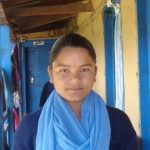
Name: Samjhana Rawal
Hobbies: Drawing, Volleyball,
Dancing, Singing
Aim:
Government Employee
Family
Size: 2 brothers and 2 sisters, Father, Mother and
Granny
Family
Status: Father runs a farm and raises cattle in
Chhipra. He sells vegetables in Simikot and stores millet, buckwheat,
porso-millet, wheat, barley, etc. for the winter. Her father is the only source of income. They
harvest the wheat and all sorts of edible food. Her sister, ThirthaPuri (studying at 5th
grade) supports the family with household work.
One brother studies in the village and also supports the family.
What
does their family say: Happy and aspire to work hard and move
forward. Motivated and active participates in both practical work (house work)
as well as academic performance.
School
Background: Studies at Balmandir H.S School.
Inspired and encouraged by her teachers and is a favourite student in her
class.
Hostel
Field: Seniors are inspiring and motivating them to
work hard and help them with their school work.
After
10 what? Prepare for higher studies and possibly government
jobs (public service commission Nepal). To engage in any occupation related to her
family business.
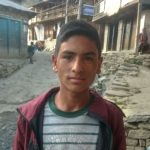
Name:
Lok Raj Shahi
Hobbies: Drawing, Football, Quiz,
Volleyball
Aim: Engineering
Family
Size: 2 brothers and 2 sisters, Father, Mother and
Granny and one uncle
Family
Status: There are two people who work in the family
(a brother and a sister). The other sister is married. Farming, raising cattle
and selling goats is the only source of
income along with selling vegetables in Simikot. During the winter they have a
reserve of food known as millet, buckwheat,
porso-millet, wheat, etc.
What
does their family say: They are happy and inspire their
children to work hard at their academic aspects. The children are not pressured to work in the field. They say they are blessed with giving this
kind of opportunity to their children and support the hostel by sending some of
their food to the hostel.
School
Background: Studies at Balmandir H.S. School. He finds the teachers are very co-operative,
inspire the weak and ask them to do better next time.
Hostel
Field: If
supported, I will study further. Junior in his grade and is hard working. They
help each other and the newly brought technology has provided an opportunity to
learn something via laptop.
After
10 what? If support is given I will go on to
further studies.
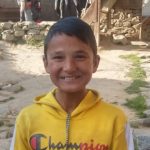
Family
Size: 1 sister and 2 brothers, Father, Mother
Family
Status: Father works at Humla Delights Bakery at Simikot.
Also farming, raising cattle and selling
vegetables in Simikot. They store kodo millet,
buckwheat, porso-millet, wheat, and so on for the winter time. Father is the
only source of income. One brother studies in the village and helps support the
family along with his sister.
What
does their family say: Happy and inspire them to work hard and move
forward. Motivate and actively participate in both practical work (House work)
as well as academic performance.
School
Background: Studies at Balmandir. Inspires and
encourages me and is a favourite student of his class. Keep the pride of school
and work harder.
Hostel
Field: Seniors are inspiring and motivating them to
work hard and help them with their school work.
After
10 what? If possible,
will take Computer Courses. Will help
family and engage in family business via bakery.
Until 1993, Spiti was totally isolated. A high altitude desert valley lying on the border of India and Tibet, it was hidden behind the “Inner Line”, a no-man’s land between the super powers where only Indian Border Police were allowed.
The valley was populated by eight small villages and several Buddhist Monasteries, as it once had belonged to the Tibetan kingdom of Guge.
In 1996, I was one of the first foreigners to visit, attending a Kalachakra ceremony given by His Holiness, the Dalai Lama to celebrate the 1000th birthday of Spiti’s Tabo monastery. As we drove north through the valley following the ceremony, we came across “The School”, named Munsel Ling (from Darkness into Light) by the Dalai Lama, two days earlier. A long white building in the middle of the desert landscape Curious, we entered and were greeted by the young lama Tashi Namgyal from nearby Ki Monastery who had been instrumental in its construction. Lama Tashi proudly showed us around and introduced us to the students: 75 children, 2 kindergartens and one Class 1, boarded by local families. He shared his dreams of developing the school, one year at a time and building accommodation for his young charges, to provide education for the children of Spiti whose parents, subsistence farmers, were illiterate.
At that time, little did I realize that the school would become part of my life and to which I would return several times. Back home in Vancouver, to my surprise I discovered TRAS was supporting House Mother training and immediately joined the board.
Fast forward to 2019. The school is now a virtual village with students from kindergarten to Grade 12. The scruffy urchins, I first met, are now eloquent, educated young people who are helping to develop their community. Lama Tashi has realized his dream through much hard work and resilience. The people of Spiti are no longer considered unworthy of education. It is wonderful to see him honoured for his efforts, which he relentlessly pursues even today.
TRAS has been there from the beginning, assisting him financially with many projects over the years. TRAS sponsors have provided funds to train the first doctor, the first vet, engineers, teachers, nurses etc. The need continues and currently, I am proud to be sponsoring my third young person through medical school. These children are bright, intelligent and thirst for knowledge; they deserve to be supported in every way possible.
A year ago I’d never heard of the Spiti Valley in northern India. For the similarly uninitiated, it is wedged between two major tourist regions: the Garhwal Himalaya to the south and the Ladakh ranges to the north. Despite being so close to these areas however, Spiti is a really difficult place to get to. There is no airport and only one unsealed road in and out. Snow closes the road from November to May and it is challenging and at times impassable the rest of the year. The trip from Keylong to Kaza, the main town in the Spiti valley, is only 160 km, but it took us a full 12 hours on the worst road I have ever been on. Not surprising then that Spiti has remained remote and isolated from the modern world for so long.
We knew of the Munsel-Ling school from a friend who sponsors a student there. Battling extremely limited internet connectivity in Kaza, I found the school’s page on Facebook and was able to get a message out about a possible visit. Lama Tashi replied right away and let us know we were welcome the next day.
We arrived at Munsel-Ling school not knowing quite what to expect. There is a small building for “Admin”, and there we found Lama Tashi and his team waiting for us, extremely welcoming and brimming with enthusiasm. His English is excellent and he has a modest, humble presence that belies his stature in the Buddhist community. It was immediately clear that we were going to be treated as honoured guests, with tea and refreshments, a full lunch and student performances. It was amazing.
We started with a tour of the main campus, which is much larger than I expected. The classrooms are small, with about 25 students per class. Teachers are local Spitians as well as some Indians from outside. Everyone speaks English and the quality of education is evident. In fact several graduates from Munsel-Ling have gone on to university in India and, significantly, some have returned to Spiti as doctors and other professionals to serve their community. It is inspirational and it highlights the impact of this remarkable school on Spiti.
Most students at Munsel-Ling live at the school for much of the year, and we visited a number of their boarding houses and rooms. Accomodation is basic, dorm style, with outside toilets. Each student has a small trunk or suitcase for their clothes and personal possessions, all stacked in a storage area outside each dorm. Winter heat is provided by wood stoves, and we saw lots of wood around the campus being prepared and stored for the coming cold.
The kitchens and dining rooms were also interesting. Feeding so many students is a major undertaking and there are huge pots for cooking, a massive rice cooker, and lots of food and fresh fruit. All cooking is done on propane and kerosene, but there is a wood-fire backup system as well. The diet appears to be as nutritious as possible.
There is a special area on campus for the very young children (4 -6 years old) with play areas, small classrooms, full-time staff and separate dining rooms. The teachers we saw were incredibly hands-on and caring, doing everything they could to help the little ones get through the day without parents. It was both heartening and heartbreaking to witness the lengths to which some families will go to ensure the best possible futures for their children.
The library and computer rooms are a central part of the school. The library / learning centre in particular is lovely, with many books, local art, and comfortable chairs. It relies on donations and we were told that new books, especially classroom sets, are always welcome.
We visited the medical center next where concrete efforts to improve student health, student nutrition, and dental hygiene were evident. This is facilitated in part through an ongoing collaboration with the University of British Columbia Global Health Initiative. They keep detailed student health records, and an analysis of the school’s meal program was underway to determine if any changes needed to be made. We were impressed.
There is much evidence of foreign aid at Munsel-Ling. The new TRAS-funded laundry facility, although basic, is clean and efficient and great for students to learn self-sufficiency. Likewise, a new dual-season toilet block is almost completed, with flush toilets for the summer and pit toilets for the winter. Huge new cisterns are part of this project as well, benefiting the whole campus. There is also a large diesel generator for dealing with power outages, water filtration systems, and a computer network. Lama Tashi is full of plans and ambitions for future projects as well as being committed to completing the ones that are in progress. New schools, hostels and other programs are already underway in other parts of Spiti.
We left Munsel-Ling with great enthusiasm for Lama Tashi and his organisation and amazement at his ability to leverage the resources and goodwill around him. He has had a profound impact on Spiti and we can only assume there is much to come.