Time: Doors open at 6:30 pm – talk at 7:00 pm Location: Tsengdok Monastery, 1502 Angus Drive, Vancouver Cost: By Donation (proceeds to the READI Nepal Education Project in Humla)
SPACE IS LIMITED – REGISTER BY phoning the TRAS office at 604-224-5133 or e-mail to info@tras.ca
Event Details:
In this talk, anthropologist Sara Shneiderman will share her research on Nepal’s political transformation. From the Maoist-state civil conflict that ended in 2006, through two elections, several ethnic and regional identity-based movements, to an ongoing constitution-drafting process, Nepal has experienced dramatic upheaval and change over the last several decades. Illustrated with recent photographs from her visits to rural and urban areas of the country, Professor Shneiderman will highlight the key issues under debate in the state restructuring process, and consider how they affect the daily life and aspirations of Nepali citizens.
Speaker bio:
Professor Shneiderman is a socio-cultural anthropologist working in the Himalayan regions of Nepal, India, and China’s Tibetan Autonomous Region. Her research explores the relationships between political discourse, ritual action, and cross-border mobility in producing ethnic identities and shaping social transformation. Current research projects include an ethnography of “post-conflict” state restructuring in Nepal, and an exploration of trans-Himalayan citizenship across the historical and contemporary borders of India, China, and Nepal.
Megha Shakya, TRAS Board Director, visited the TRAS funded toilet reconstruction project on February 12th and 13th, 2016. Here is his report.
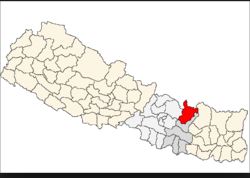
Dolakha, Nepal
The village is situated in the lap of Mt. Gauri Shanker, a majestic Himalayan peak. The 6 hour drive from Kathmandu becomes pleasant all the way after the tourist resort of Dhulikhel. With a cup of tea at Zero one, the real journey begins. After Kharidhunga, there are valleys on the right as well as on the left of the road that runs along the ridge. Layers and layers of mountains and valleys, terraces and Himalayan peaks keep the journey pleasant. Once pristine, Charikot is now a bustling market place, often crowded. Then comes the historic Dolakha, a Newar settlement, after which one reaches Susmavati Village of Thamis, one of the earliest indigenous people known as Kiratis of Nepal.
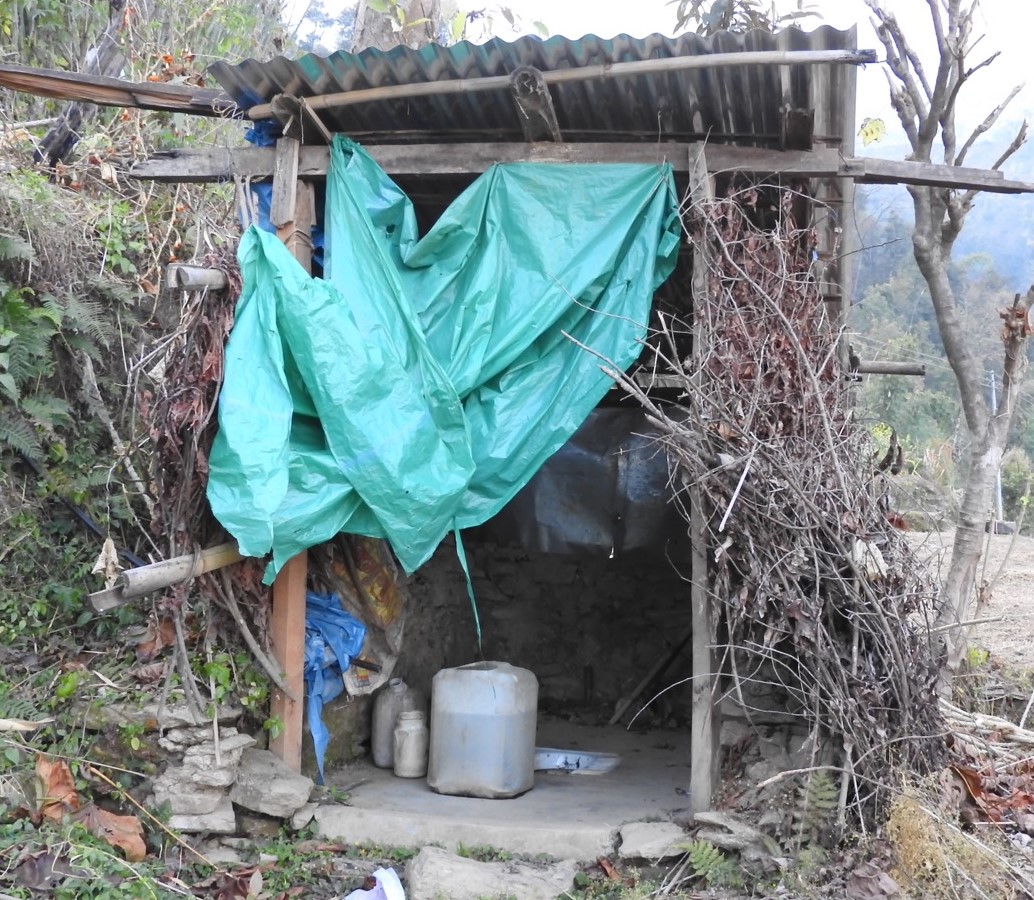
In my view, TRAS has made the right decision to support Shree Fashelung Social Service (SFSS) to rebuild the toilets. I visited many houses that are now reduced to rubble. There is not a single house in the village that did not suffer damage during the earthquake of April 2015. Except for some limited emergency relief of supplies like rice, corrugated sheets, clothes, and temporary learning centres for children by the government, NGOs like Plan International, individual donors, and the Nepal Red Cross, the entire 1540 households of the Susmavati Village area have not received any support for rebuilding. Almost into a year now since the disaster, all the households are living in makeshift shelters that have been created from salvaged materials. The makeshift toilets have been a serious concern to them. It was a very sad scene even now 10 months after the earthquake. It brought tears to my eyes.
Every family in this area makes their living from limited land on the mountain slopes and some wages from labouring in nearby market centres like Dolakha Bazaar, Charikot and Kathmandu. Prior to the earthquake, the village was an Open Defecation Free and Indoor Smoke Free zone – this is by no means a small achievement.
There is 24/7 electricity supply to the village from a micro-hydro unit that produces a little less than a kilowatt output just a kilometre down the stream – can be considered a luxury compared to Kathmandu with 16 hours of power cut every day. Almost all the households had high definition TV dish antennas. Every adult carries one cell phone. Before the earthquake, many households had permanent toilets with biogas plants that were used for cooking food. They looked comfortable with what they had. The Thami people are peaceful and content with what they have even now, although they have nothing except the few patches of land on the slopes of the mountains.
I spent an overnight in a thatch house on a slope on the roadside – courtesy of SFSS. The structure is standing on about 16 thin wooden poles with a diameter of five inches. I shared the room with the driver who drove me to this village. During the night, the driver told me that the thatch swayed whenever someone walked or if there was a gust of wind. At the back of our minds were the earthquakes that continued intermittently now and then. I did not want to think of that. The visit to the squat toilet at night was a nightmare because I had to navigate through unstable rocks some 30 feet down a slope.
SFSS has calculated how many households would need toilets. They found the following: Total households 1540. Households living in Kathmandu and elsewhere: 200, households which have financial capability: 100, households having joint toilets: 300. From these figures, they have come up with the figure of 940 households needing toilets. Of this total need, TRAS has been approached to fund 200 toilets at this point in time.
SFSS has selected a first batch of 40 households to receive toilets on the basis of following criteria:
a. Households with more than 3 people living
b. Lowest income
c. Permanent residency
d. Socially active
e. Total destruction of the former toilet by the earthquake
SFSS under Bhakta Singh Thami, a retired Police Constable, and his team impressed me by their work. All of them are working as volunteers. I met all of them. Every one of them lost their houses like everyone else in the village. They are diligently working to ensure that their village is rebuilt and have brought the village life style back to normal. They have let the villagers know the selection criteria and answered all questions from the community to ensure that there is no conflict.
SFSS is satisfied with the work of the village masons carrying out the work. SFSS has procured the cement from Santosh Construction Materials Centre in Charikot, the nearest market to the village. Based upon my comments, SFSS has decided to increase the level of monitoring the construction work for quality control, and ensuring every toilet has a running water tap. Overall, the construction work is going on pretty well completing almost all 40 toilets. I inspected about 15 households and the toilets under construction in various stages from digging ground for septic tanks, raising walls, laying squat toilets, etc. As the households are scattered along the mountain slopes, even walking the trails was tricky in a few places requiring some assistance from the locals.
SFSS is already on the way to selecting the next batch of 40 households. They will need the funds right away. In view of the recent experience of the long delays in transferring funds, I recommend TRAS initiate sending the next disbursement of funds at the earliest. The villagers are mindful of the usual storms that normally arrive towards the end of March and beginning of April, followed by monsoon rains in June. SFSS is therefore keen to build the remaining toilets as soon as possible. I reminded the SFSS Committee to send an interim progress report to TRAS.
I noted there was only one woman on the SFSS committee. Upon my suggestion, SFSS has committed to increase women’s participation in committees, programs and activities in the coming days. They will initiate activities to help towards women’s health and children’s education, raising funds locally to cultivate the culture of giving especially during festivals and birthdays, preparing skills development programmes, supporting women’s cooperatives, etc. I see great potential for TRAS to help this community in health and education sectors. The need is there. The partner is genuine and good. They are fresh and willing to learn and they want to take responsibility.
My visit to the project site was concluded with a community meeting in which 88 people participated to welcome TRAS’s visit, review and report about the toilet construction progress and provide individual feedback from the beneficiaries. It was a beautiful sunny morning, in the open air on the ground of the community school. I had the opportunity to listen to the pains and pangs from the villagers, both men and women, during and after the earthquake, the continued struggles and their hopes for the future. They asked me to give my impressions of their village and their work. I told them what I saw, how I felt and how I visualized their upcoming future. With jubilation, the meeting concluded. The SFSS committee members walked up to the road to bid farewell.
In the bitter cold of a Spiti winter, in the foothills of the Himalaya, the children are sitting in school all day on the floor. It is difficult to focus on learning when it is cold and uncomfortable.
With your help, the children have desks. Just $32 purchased a solidly built desk with built in bench. Learning will improve!
18 years ago there was no school at all for these children, and life was a perpetual round of poverty.
Enter the local Buddhist Society, whose members believed that the children from the poverty stricken villages deserved an education and that, given a chance, they would shine. TRAS has been supporting the school since its humble beginnings
The school complex is now the largest ‘village’ in the Valley and the first graduates are showing astonishing success in several fields. They are returning to serve their community as teachers, nurses, doctor, vet and engineers.
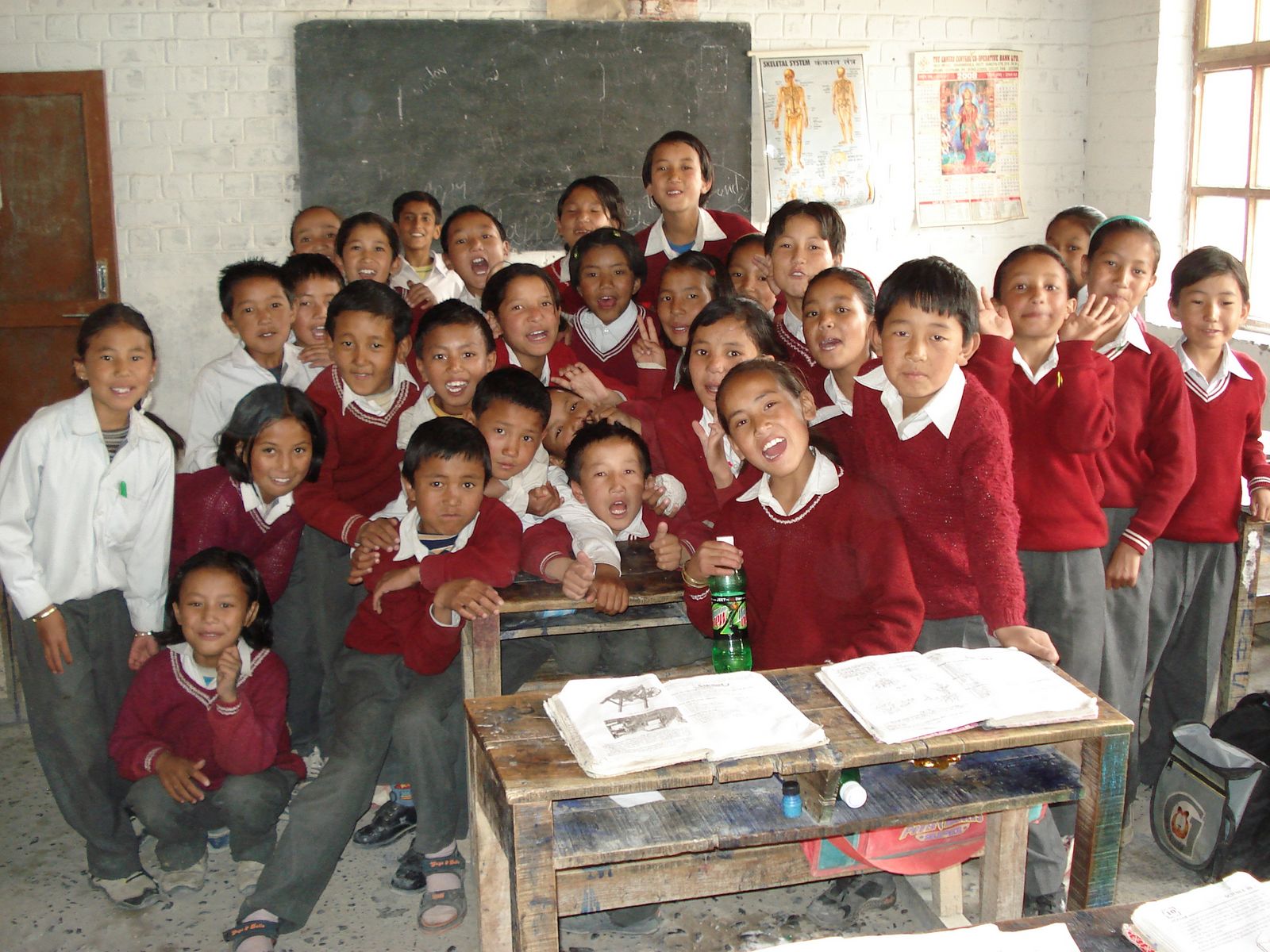
Munsel-ling students and a double desk
Munsel-ling School is now so successful that more villagers are begging to have their children educated there. As a result, the school has built 8 new classrooms this year. The children are currently sitting on the floors – and in the bitter cold of Spiti that is no fun.
TRAS, with the help of their donors was able to provide 150 double desks with benches, notice boards and simple supplies. None of the frills of a Canadian classroom – just the basics.
Click here to read the Project Completion Report from November 2016.
Can a child learn well when she has lice, anemia and diarrhea?
She needs a better diet, including lots of fresh green veggies – but how to get them in the arid desert-like conditions of the remote Spiti Valley? And if her school does manage to plant them, how will they nurture and protect the vegetables?
Munsel-ling School has the answer – now TRAS wants to implement it. With YOUR help, these precious vegetables can be cared for and protected to provide much needed nutrients for the children.
In this harsh, cold environment, greenhouses are essential for growing the green vegetables needed to help combat anemia. The 50ft long greenhouses are working well – EXCEPT that they are unprotected. Cows and dogs are causing havoc, the heavy polythene roofs are being torn and a good watering system is non-existent.
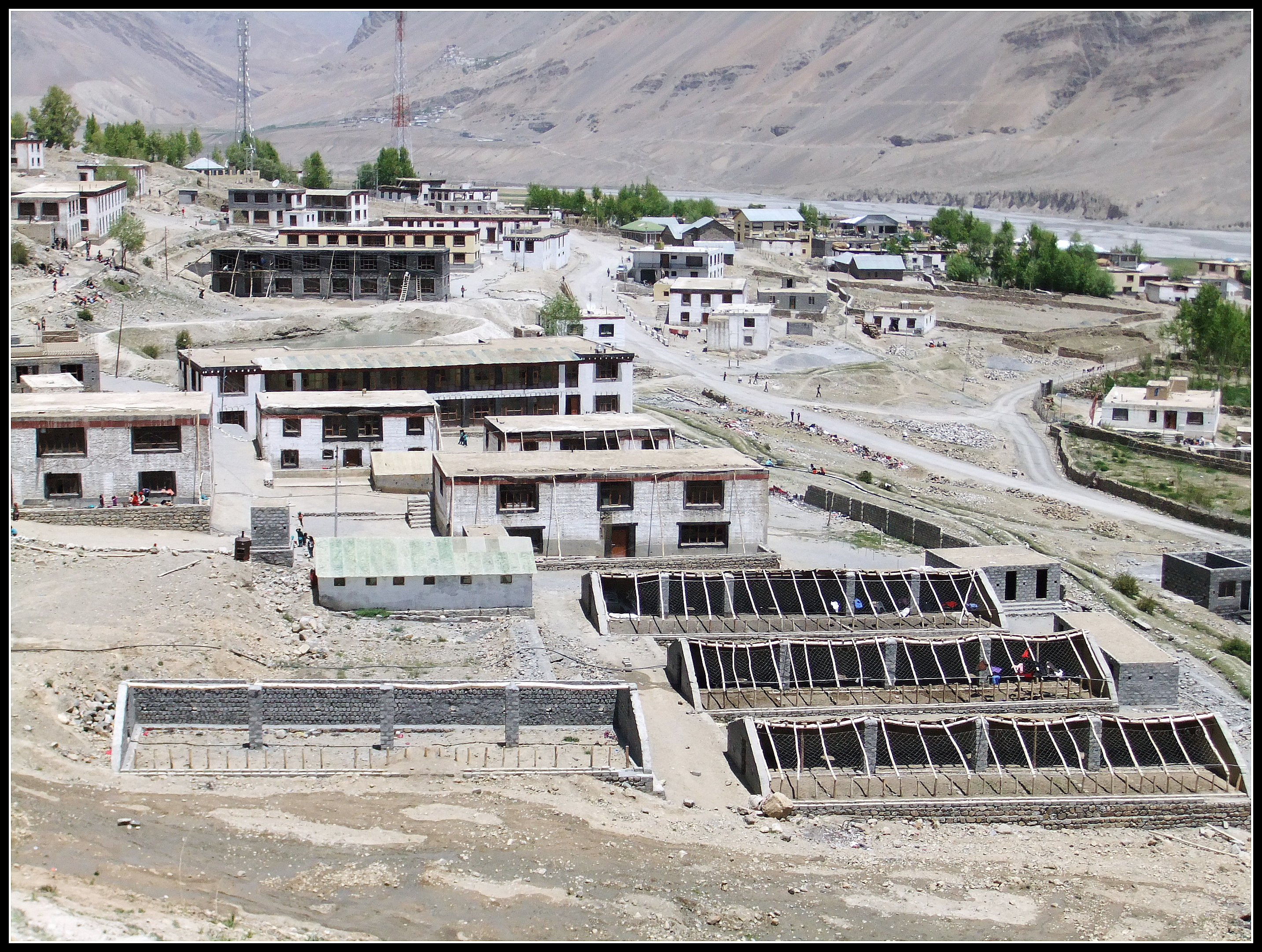
Munsel-ling – greenhouses in forefront
Now that the first greenhouses have proven their worth, the school wants to create a secure compound. Needs are:
A strong 4 foot high wall to keep out marauding animals (and the kids who love to slide down the roofs!)
Properly engineered canals to provide water
A large cement water storage tank
A smaller tank in each greenhouse to be filled with snow – it will melt in the comparative warmth of the greenhouse for water during the freezing winter.
A shed for equipment and compost storage
A small cottage for the permanent gardener.
Good soil for the summer plants to be grown between the greenhouses.
Munsel-ling Greenhouse
Once all this has been accomplished more greenhouses can be built to feed the 500 children at the school. But the compound must be secured first. The snow will start soon– there may just be time to start clearing the land and collecting stones to ready the site for the wall construction next spring.
At the end of a risky flight or a 10-day hike in, what better than a cup of real coffee in a clean cup!
TRAS is ‘breaking new ground’ with this exciting project. READI Nepal is a small local non-governmental organization (NGO) in Humla, the far northwest corner of Nepal’s mountains. It is committed to improving the lot of the village children through education.
So why are we talking about coffee? The villagers cannot pay for coffee, let alone for their kids to go to school, but READI Nepal has an innovative plan to raise funds to pay for the schooling. It’s called the HUMLA DELIGHTS CAFÉ.
And why a café? Nowhere in Humla can you get a cup of coffee or clean, safe food. Although the population is tiny and poor, many government officials visit the town, and tourists and trekkers are starting to arrive (1500 last year). Humla is at the western end of the Great Himalaya Trail. READI Nepal sees an opportunity to get in first with a cheerful, clean café, serving decent coffee, tea and baked goods.
They have created a hostel for 30 children in the tiny capital of Simikot and the children go to a local private school. Through TRAS-supported projects, the children are excelling at school. They are healthy and well fed.
Now this far sighted NGO is encouraging the parents in small income generation schemes, so that eventually they can pay for their children’s education. The latest project is the café.
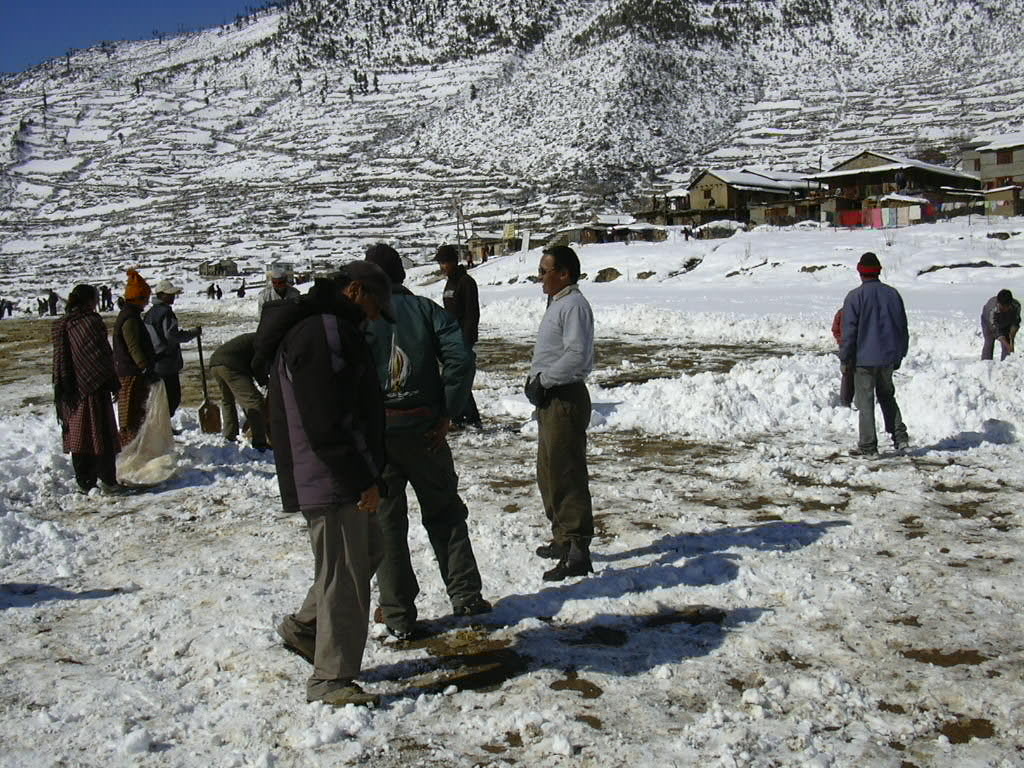
Simikot airstrip with volunteers clearing snow
A building has been rented near the airport. That means right in the centre of town – the airport is simply a strip of land surrounded by town buildings. One of our directors visited a few years ago and says she would have raced to such a café after that flight! And if the planes aren’t flying, you have to walk in for 10 days – there are no roads in these mountains.
So here’s the plan:
READI Nepal will have a ‘barista’ trained in Kathmandu;
A simple coffee machine and a bread making machine will be purchased.
The hostel cook will bake bread from local grains both for the hostel and for the café.
Their business plan is well thought out. They realistically expect the café to be open only 8 months of the year, and will start small.
TRAS will provide $5,500 to get this venture on its feet.
All profits will go towards the hostel costs, thus reducing the amount of TRAS support needed.